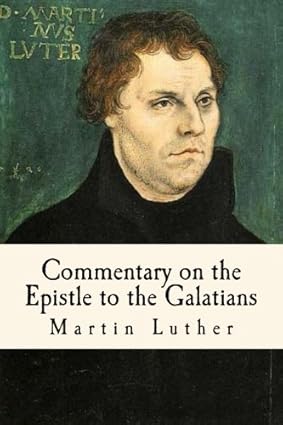
"For the sake of argument let us suppose that you could fulfill the Law in the spirit of the first commandment of God: 'Thou shalt love the Lord, thy God, with all thy heart.' It would do you no good. A person simply is not justified by the works of the Law. The works of the Law, according to Paul, include the whole Law, judicial, ceremonial, moral. Now, if the performance of the moral law cannot justify, how can circumcision justify, when circumcision is part of the ceremonial law? ... With Paul we absolutely deny the possibility of self merit."
"Paul does not deny the fact that he is living in the flesh. He performs the natural functions of the flesh. But he says that this is not his real life. His life in the flesh is not a life after the flesh. 'I live by the faith of the Son of God,' he says. 'My speech is no longer directed by the flesh, but by the Holy Ghost. My sight is no longer governed by the flesh, but by the Holy Ghost. ... It enters the heart by faith."
"Paul as a true apostle of faith always has the word 'faith' on the tip of his tongue. By faith, says he, we are the children of God. The Law cannot beget children of God. It cannot regenerate us. It can only remind us of the old birth by which we were born into the kingdom of the devil. The best the Law can do for us is to prepare us for a new birth through faith in Christ Jesus. ... To them gave he power to become the sons of God, even to them that believe on his name.' (John 1:12.)"
"A son is an heir, not by virtue of high accomplishments, but by virtue of his birth. He is a mere recipient. His birth makes him an heir, not his labors. In exactly the same way we obtain the eternal gifts of righteousness, resurrection, and everlasting life. We obtain them not as agents, but as beneficiaries. We are the children and heirs of God through faith in Christ. ... Nothing would be more welcome to us than early death, knowing that it would spell the end of all our miseries and the beginning of all our happiness."
Source: Project Gutenberg eBook of Commentary on the Epistle to the Galatians